Sourcing Denim Through Joyagoo Spreadsheet Jeans in 2026
Jeans are personal. The fit, the wash, the weight of the denim, the way they break in over months — these things matter to anyone who wears denim daily. My old sourcing method involved scrolling through Google Sheets that took 30+ seconds to load, trying to compare listings that had inconsistent formatting. When I switched to the Best Joyagoo spreadsheet platform, the improvement was immediate: web pages that load in under two seconds, with standardized listing formats across all sellers.
The Joyagoo spreadsheet Jeans category covers everything from raw selvedge denim to stretch-heavy skinny fits. Each listing shows the product, price, and a direct link to order through the agent platform. I can scan fifty listings in the time it used to take me to load one sheet tab.
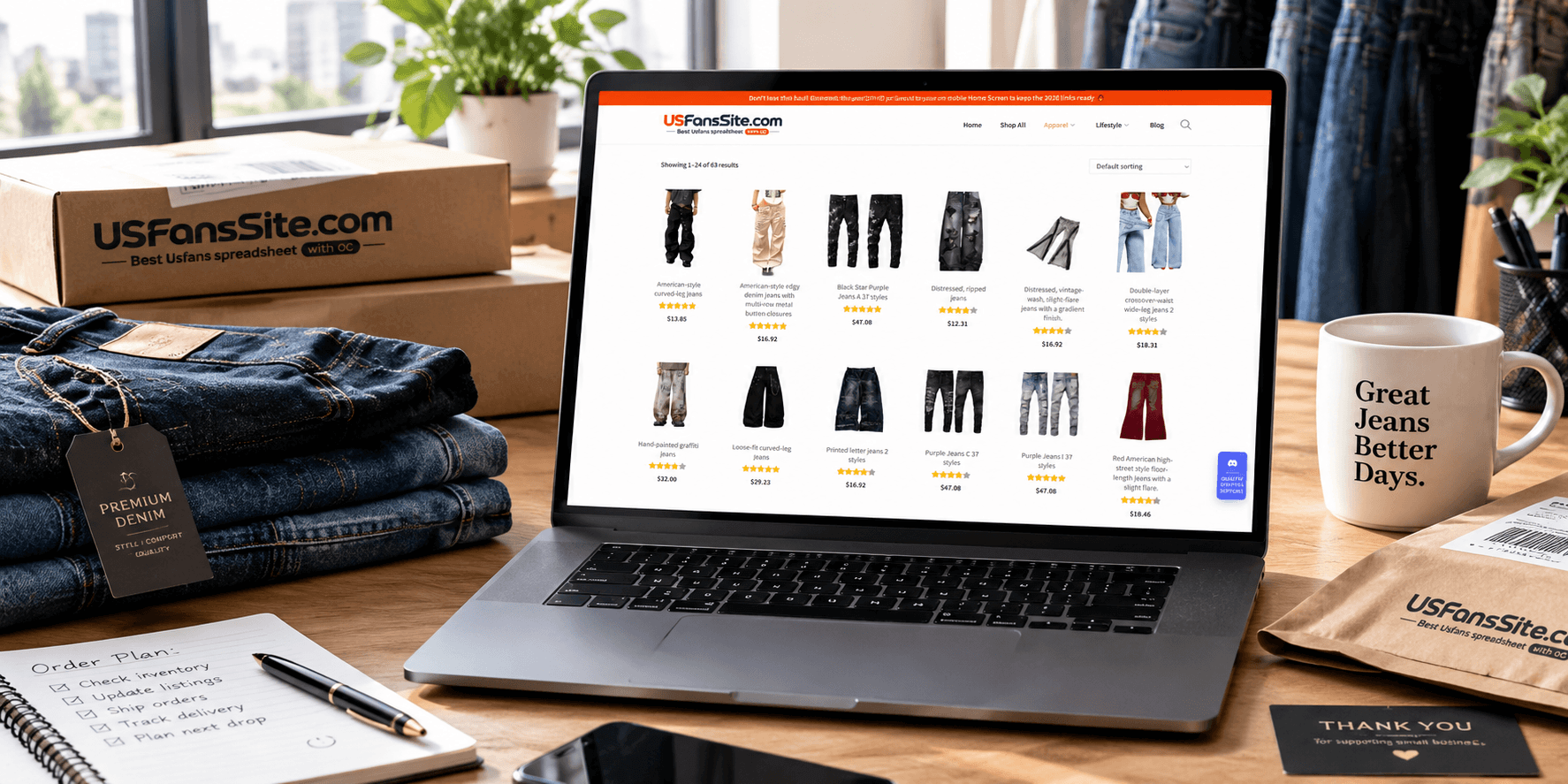
Denim Weight and Stretch: The Two Numbers That Define Fit
Every pair of jeans is defined by two numbers that most listings don’t prominently display: fabric weight (in ounces or GSM) and stretch percentage (elastane content). I’ve learned to always confirm these before ordering.
Fabric weight determines how the jeans feel and how they’ll age:
- 8–10 oz: Lightweight, soft, drapes easily. Summer-friendly but loses shape faster.
- 11–13 oz: Midweight, the standard for everyday jeans. Balances comfort and durability.
- 14–16+ oz: Heavyweight, rigid when new, breaks in beautifully over months. Best for raw and selvedge denim.
Stretch percentage determines how forgiving the fit is:
- 0–1% elastane: No stretch. Raw denim. Will not recover if stretched — sizes up permanently at stress points.
- 1–2% elastane: Minimal stretch. Feels mostly like rigid denim but recovers better.
- 2–4% elastane: Comfort stretch. Moves with you without looking like jeggings. My preferred range for daily wear.
- 4%+ elastane: Heavy stretch. Very forgiving but can look thin and lose shape by end of day.
I always message the seller to confirm both numbers. Sellers who can answer this question precisely tend to be more detail-oriented across the board.
Jeans QC: What I Check Stitch by Stitch
Denim is unforgiving — construction flaws that would be invisible on a printed t-shirt are glaringly obvious on jeans. Here’s my QC routine:
Inseam and outseam stitching. I examine the main seams in the QC photos. The stitching should be straight, evenly spaced, and consistently tensioned. Wavy seams or skipped stitches indicate poor construction quality. On selvedge denim, the outseam should show the selvedge edge — a woven self-edge that prevents unraveling.
Pocket bag depth and fabric. I request a photo of the pockets. Quality jeans use pocket bags made from a sturdy cotton twill that won’t tear at the pocket corners. Thin pocket bags are a cost-cutting measure that leads to pocket blowouts within months.
Waistband construction. The waistband should be firm and structured. I check whether there’s a curtain (the inner waistband lining) and whether it’s properly stitched. A waistband without proper internal structure will roll and twist after a few washes.
Button and rivet placement. Every rivet should be centered over its stress point and fully flush with the fabric. Protruding rivets will scratch surfaces and snag other clothing. The main waistband button should sit firmly in its hole without sliding.
Wash consistency. For pre-washed denim, I check that the fading and whiskering are symmetrical between the left and right legs. Uneven washing is a sign of rushed production. The color should be consistent across panels — dramatically different shades between the waistband and legs is a red flag.
Zipper or button fly functionality. For zip fly, the zipper should operate smoothly and stay locked at the bottom. For button fly, each button should pass through its hole with a firm snap.
The Inseam Measurement Method That Hasn’t Failed Me Yet
Jeans sizing is notoriously inconsistent. A size 32 from one manufacturer can have an inseam of 30 inches, while another’s 32 has a 34-inch inseam. To eliminate guesswork, I use this method:
I lay my best-fitting pair of jeans flat and measure: (1) the waist across the top, laid flat and doubled, (2) the inseam from the crotch seam to the bottom of the leg, and (3) the thigh width at the widest point. I send these three measurements to the seller and ask them to confirm the equivalent measurements on their product.
This approach has been accurate for every jeans order I’ve placed through the platform. It takes the guesswork out of cross-brand sizing entirely.
Shipping Jeans: Mid-Weight, Manageable
A pair of jeans typically weighs 600–900 grams, putting them in the middle range for shipping costs. They’re not as light as t-shirts but not as heavy as jackets. This means:
Two pairs of jeans shipped together usually stay under 2kg, which keeps you in the most economical shipping tier. I always consolidate jeans orders — the per-item shipping cost drops significantly when you ship two or three pairs together.
Jeans don’t require special packaging. They can be vacuum compressed for a modest volume reduction, but the weight savings from removing tags and packaging are minimal. Focus on consolidation rather than repackaging for jeans.
FAQ
Q: What are the advantages compared with a traditional Google Spreadsheet?
A: Speed and consistency. The web platform loads in under two seconds; a Google Sheet with thousands of denim listings can take 30+ seconds. Beyond that, the listing format is standardized — every product has the same fields in the same layout — whereas Google Sheets listings vary wildly in formatting between sellers, making comparison frustrating.
Q: How do I find the best Joyagoo finds?
A: For jeans, I sort by newest first and check daily. The best listings — high-quality denim from proven sellers at good prices — tend to get ordered quickly. I also filter by seller rating: 4.7+ stars with 300+ transactions is my baseline for jeans, because denim construction quality varies more than any other category.
Q: Which carrier is fastest to Australia?
A: Express shipping lines to Australia typically deliver in 7–12 days. Economy lines take 20–30 days. Jeans fall into a moderate weight category, so express shipping is reasonably priced — I’ve paid $12–18 for express on a single pair. Australian customs is generally efficient, and under the GST threshold ($1,000 AUD), personal imports aren’t taxed.
Q: Can I refund after QC photos?
A: Absolutely. If the QC photos reveal construction issues — uneven stitching, misaligned rivets, inconsistent washing — reject the QC and request either a replacement from a different batch or a full refund. Do this before shipping, because returning jeans internationally is expensive and often costs more than the product itself.