Showing all 22 results
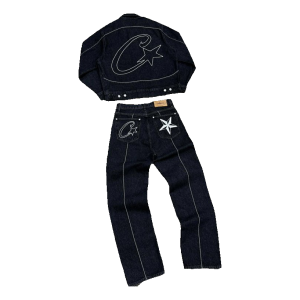

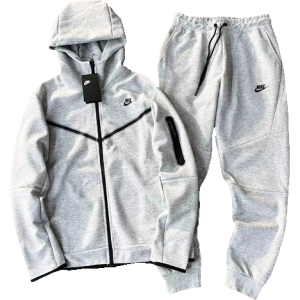
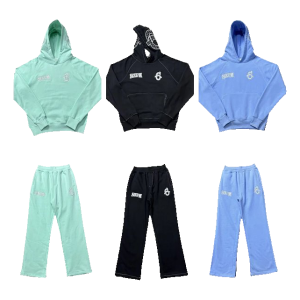
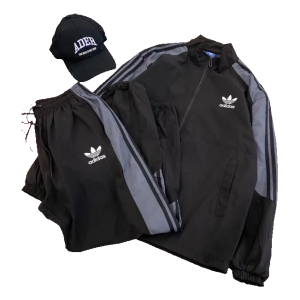
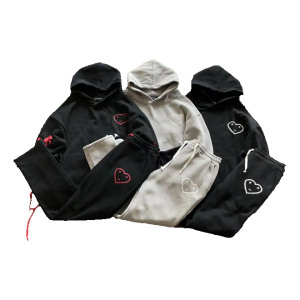
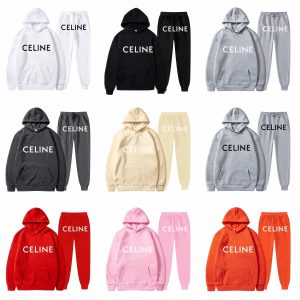

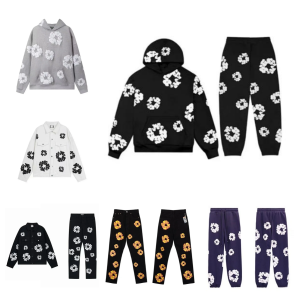
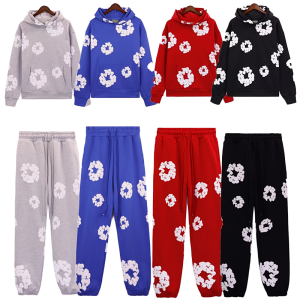
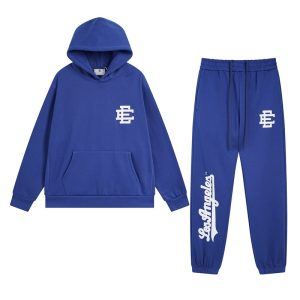
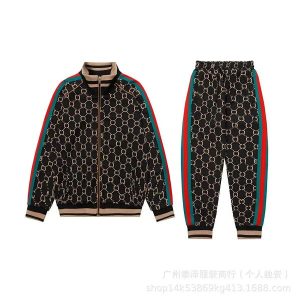
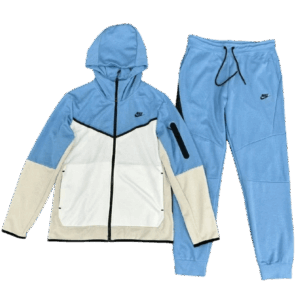
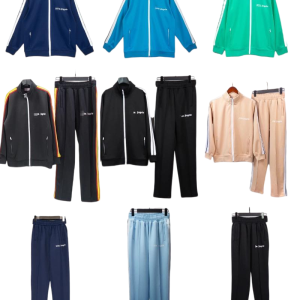

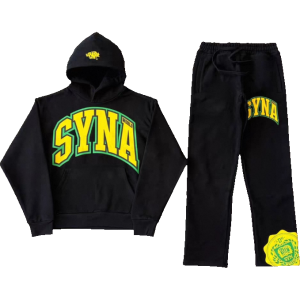
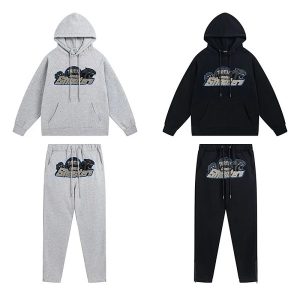

Joyagoo Spreadsheet Sets — 22 Coordinated Two-Piece Outfits with Match QC
Coordinated sets solve a problem that every shopper has experienced: you find a great top, you find a great bottom, but they do not go together. The Joyagoo spreadsheet Sets section eliminates that friction by curating 22 pre-matched two-piece outfits where the top and bottom are designed to be worn together — same fabric, same color palette, same design language. Every set in this archive has been evaluated not just for individual piece quality but for the consistency between pieces, because a set where the top and bottom feel like they came from different manufacturers defeats the entire purpose.
This archive replaces the tedious process of scrolling through a Google Sheet trying to find matching items across separate listings. By presenting pre-coordinated sets in a fast-loading web catalog, we make it possible to evaluate entire outfits in seconds rather than spending 20 minutes cross-referencing fabric weights and color codes between different product rows. When you find a set you want, the link takes you to the agent platform for purchasing.
If you are exploring the full product range, the Best Joyagoo spreadsheet homepage shows every category at a glance.
Set-Specific Quality Assessment
Evaluating a coordinated set requires a different approach from evaluating standalone pieces. The relationship between the top and bottom is itself a quality dimension:
Fabric consistency between pieces. This is the defining quality marker for any set. The top and bottom should use the same fabric — same weight, same weave, same fiber composition, same dye lot. We verify this by comparing fabric texture, sheen, and hand feel across both pieces in QC photos. A set where the hoodie uses 320gsm French terry but the matching joggers use 260gsm fleece is not a true match — the color and texture will diverge after a few washes, making the set look mismatched over time.
Color matching across pieces. Even when both pieces use the same fabric, dye lot variations can create subtle color differences. We compare both pieces under the same lighting in QC photos and flag any visible mismatch. Black is the most problematic color — slight dye variations create a “one piece is navy, one piece is black” effect that is invisible in product photos but obvious in person. For this reason, we pay extra attention to dark-colored sets during evaluation.
Proportional sizing consistency. If the top is a size large, the bottom should also be a size large, and both should fit the same body type. We cross-reference the measurements of both pieces to ensure that a size large set actually fits like a large on both top and bottom. Some manufacturers cut tops to one size standard and bottoms to another, creating sets where the top fits perfectly but the pants are two sizes too small.
Design language coherence. Beyond fabric and color, the design elements — ribbing style, drawstring type, pocket placement, hardware finish — should be consistent across both pieces. A hoodie with metal tipped drawstrings should be paired with joggers that have metal tipped drawstrings, not plain ones. These small details are what separate a thoughtfully designed set from two pieces that happen to be the same color.
Individual piece construction quality. Each piece in the set undergoes the same construction assessment as a standalone product. The hoodie is checked for fleece density, cuff elasticity, and hood construction. The pants are checked for crotch seam reinforcement, pocket depth, and waistband quality. A set where the top is well-constructed but the bottom has loose stitching is not a quality set — both pieces must meet the same standard.
Packaging and presentation. Quality sets often come packaged together in a single bag or with a connecting tag, indicating that the manufacturer intended them as a unit. While packaging is not a functional quality indicator, it does suggest that the manufacturer treated the set as a coordinated product rather than two separate items thrown together. We note packaging type on product pages where relevant.
22 Sets: Styles and Categories
The Sets archive covers several coordination styles, each serving different aesthetic and functional purposes:
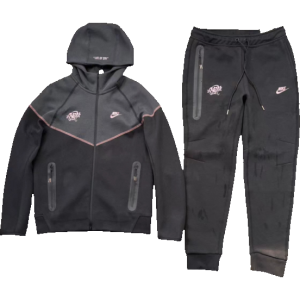
Tracksuit sets are the most represented type. These consist of a zip-up or pullover jacket paired with matching track pants, typically in polyester or poly-blend fabric with side stripe detailing. The quality benchmark for tracksuits is fabric consistency — both pieces should have identical drape, weight, and surface texture. Tracksuits in the archive range from $18 to $32, with premium options featuring better hardware (YKK zippers, metal tipped drawstrings) at the upper end.
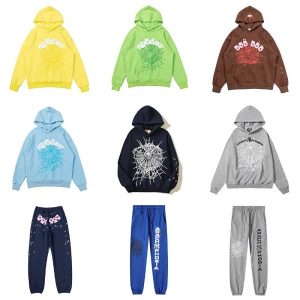
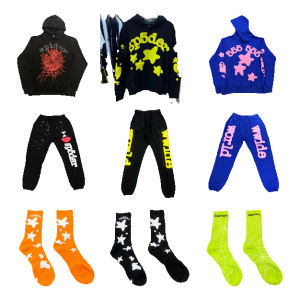
Hoodie and jogger sets pair a pullover or zip hoodie with matching fleece joggers. These are the most popular casual sets, offering the comfort of sweatpants with the put-together look of a coordinated outfit. The critical quality factor is fleece weight matching — if the hoodie uses 350gsm fleece and the joggers use 280gsm, the joggers will wear out faster and fade differently. Quality sets in this category use identical fabric for both pieces. Pricing: $16-$28.
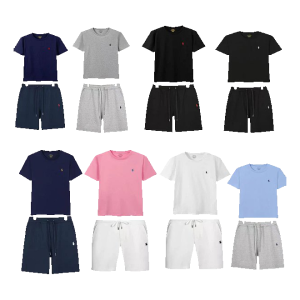
T-shirt and shorts sets are lightweight summer coordinates, pairing a crewneck or oversized t-shirt with matching shorts in the same fabric. These are typically made from 200-240gsm cotton and are the most affordable sets in the archive at $10-$18. The quality concern here is fabric weight — thin cotton on both pieces means the set will look good initially but lose shape quickly. Look for sets using 220gsm or heavier cotton for better longevity.
Knit sweater and pant sets are the most premium category, featuring fine-gauge knit tops paired with matching knit pants. These are the most complex sets to manufacture because knit consistency must be maintained across both pieces. Any tension variation between the top and bottom creates visible texture differences. Knit sets run $22-$35 and are evaluated with particular attention to stitch pattern consistency.
Value Analysis: Sets vs Separate Pieces
One of the most common questions about coordinated sets is whether they offer better value than buying pieces separately. The answer depends on what you value:
Sets are typically $2-$5 cheaper than buying the equivalent top and bottom separately, because the manufacturer bundles them as a single SKU with lower packaging and logistics costs. However, the real value of a set is not the price savings — it is the guaranteed match. Finding a hoodie and jogger in the exact same fabric and color from separate listings is surprisingly difficult, and even when you do, dye lot differences may create subtle mismatches. A set eliminates that risk entirely.
The downside of sets is reduced flexibility. You cannot size the top and bottom independently — if you need a large top and a medium bottom, a set forces you to compromise on one piece. For buyers with non-proportional body types (broad shoulders with slim waist, or vice versa), separate pieces may be a better choice despite the matching challenge.
Another consideration: sets commit you to wearing both pieces together. If you already own a lot of standalone hoodies and pants, adding a set means adding an outfit that works primarily as a single unit rather than mixing into your existing wardrobe. If your wardrobe is built on mix-and-match principles, sets may not integrate as naturally as standalone pieces.
Sizing Strategy for Sets
Set sizing follows the same conventions as standalone pieces, but with one important consideration: since both pieces must be the same size, the fit needs to work for your entire body, not just your top or bottom half. Here is how to approach it:
Check both the top and bottom measurements on the product page. The critical numbers are chest width for the top and waist width for the bottom. If your chest fits a medium but your waist fits a large, you need to decide which fit is more important. For tracksuits and hoodie sets where the fit is relaxed, sizing up is usually the safer choice — a slightly loose top is less noticeable than pants that are too tight.
For slim-fit sets (like some t-shirt and shorts sets), sizing accuracy matters more because there is less room for error. If you are between sizes on a slim set, always size up — a slightly loose slim fit looks intentional, while a too-tight slim fit looks like a sizing mistake.
Pay attention to the pants inseam length. Set pants are cut to a standard inseam that may not match your leg length. If the inseam is listed as 75cm and your ideal inseam is 80cm, the pants will sit above your ankle — which may or may not be the look you want.
FAQ
Q: Can I buy just the top or just the bottom from a set?
A: In most cases, no — sets are sold as a single SKU. However, some sellers on the agent platform may be willing to split a set upon request. Check with the seller before ordering if you only want one piece. Be aware that buying one piece from a set usually costs more than half the set price, as the seller needs to find a buyer for the other piece.
Q: Will both pieces shrink at the same rate?
A: If both pieces use the same fabric (which they should in a quality set), they will shrink at approximately the same rate. However, different garment constructions shrink differently — a hoodie with a double-layer hood may shrink slightly more than a single-layer jogger waistband. To minimize shrinkage variance, wash both pieces together in cold water and air dry.
Q: How do I know the colors will match in person?
A: We verify color matching in QC photos under consistent lighting, and flag any visible mismatch on the product page. However, lighting conditions in your home may differ from the QC photo lighting. If exact color matching is critical, order the set in a single solid color rather than a patterned or multi-color design, as solid colors are easier to match consistently.
For individual tops to mix and match, explore our Joyagoo spreadsheet Hoodies & Sweaters collection — 34 standalone layering pieces in various weights and styles.