Showing all 8 results
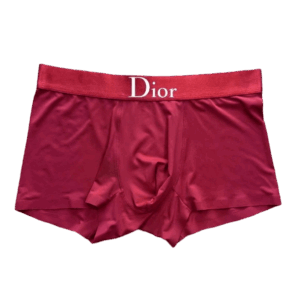
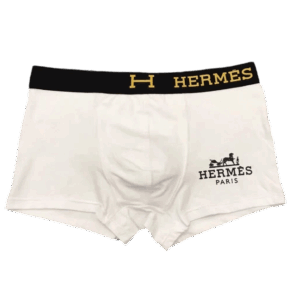
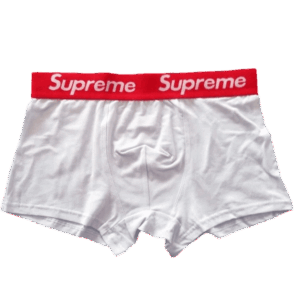
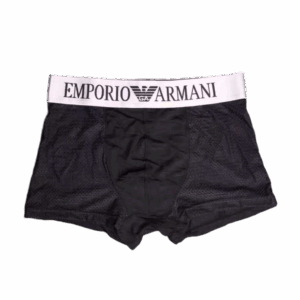
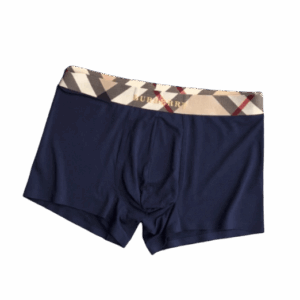
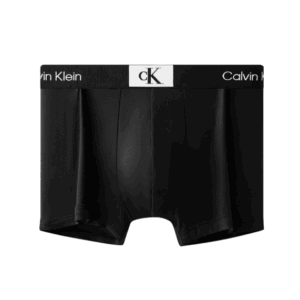
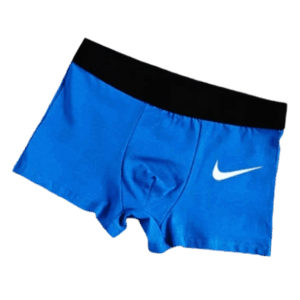
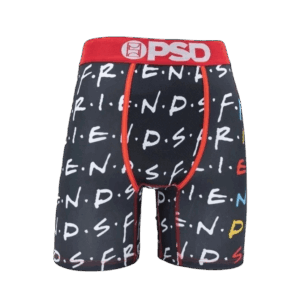
Underwear/Underpants: Curated Archive of 8 Verified Finds
Welcome to the Underwear/Underpants section of Joyagoo Spreadsheet, where 8 products are catalogued, analyzed, and ready for your review. This archive represents months of systematic sourcing research, with each product entry evaluated across multiple quality dimensions before inclusion. Whether you are looking for specific brand-inspired pieces or exploring what the current market has to offer, this collection provides the structured data you need to make informed decisions without spending hours scrolling through unverified listings.
The Best Joyagoo spreadsheet operates as an independent discovery platform. We do not handle transactions, manage inventory, or process payments. Our function is purely informational — we collect, filter, and present product options from third-party sources, giving you a consolidated view of what is available, what quality to expect, and what price range is reasonable for each category of goods.
What We Evaluate in Underwear/Underpants Finds
Every product in the Underwear/Underpants category undergoes a structured quality evaluation before it earns a place in our archive. Our assessment covers several key dimensions that directly impact your experience with the product.
Material composition is the first checkpoint. We look at fabric density, fiber content, and texture consistency to determine whether a product meets the expected standard for its category. For apparel items, this means verifying cotton percentages, checking weave tightness, and assessing whether the weight feels appropriate for the intended use.
Construction quality is equally important. Stitch density, seam alignment, and hardware functionality all factor into our evaluation. We examine whether stitching patterns match the reference standards for each brand style, whether zippers and buttons operate smoothly, and whether reinforced stress points are present where the design calls for them.
Design accuracy receives particular attention. Logo placement, font precision, color matching, and proportional correctness are checked against reference materials. For branded pieces, even minor deviations in spacing or shade can signal quality control issues that might affect long-term satisfaction with the product.
Community feedback adds a real-world dimension to our assessment. Sizing reports from previous buyers, durability observations after extended wear, and comparative notes between similar products all contribute to the composite quality picture we present on each product page.
Brand Landscape & Selection Overview
The Underwear/Underpants category features products inspired by or sourced from a diverse range of brands and design houses. The archive includes options that reflect the aesthetic directions of major luxury labels, streetwear pioneers, and contemporary fashion brands. Rather than focusing exclusively on any single brand, the collection presents a cross-section of what the current market offers, allowing you to compare styling approaches, quality levels, and price points side by side.
Luxury-inspired pieces in this category typically draw from houses known for distinctive logos, premium materials, and recognizable silhouettes. These items tend to command higher prices but also attract more scrutiny in terms of construction accuracy and brand detail precision. Mid-range and streetwear options offer accessible alternatives that balance brand-influenced aesthetics with practical wearability, often featuring more relaxed construction tolerances and different material specifications.
The archive also includes unbranded and generic options that prioritize function and value over brand association. These products are evaluated on their own merits — material quality, construction, and design — without the added dimension of brand accuracy assessment. For shoppers focused on utility rather than label recognition, these entries often represent the best value propositions in the category.
Price Range Analysis & Value Tiers
Price ranges in the Underwear/Underpants category reflect the wide spectrum of brands, materials, and construction methods represented in the archive. Understanding these price tiers helps set realistic expectations and prevents both overpaying for marginal quality and underestimating the cost of properly executed products.
Entry-level options typically range from budget-friendly price points that prioritize accessibility over premium materials. These products often use standard fabric blends, simplified construction methods, and minimal branding elements. They serve well for casual, occasional use where long-term durability is not the primary concern.
Mid-tier products occupy the widest price band in the category, balancing material quality with reasonable pricing. This segment generally features better fabric weights, more careful construction, and brand-inspired design elements that approach reference accuracy. For most shoppers, the mid-tier offers the best ratio of quality to cost.
Premium-tier entries represent the upper price range, with products that aim for closer material matches, more refined construction details, and higher brand accuracy scores. While these options cost more, our quality assessment data shows measurable differences in fabric density, stitching precision, and hardware quality that justify the premium for buyers seeking the closest possible experience to the original design intent.
Our batch analysis tracks price fluctuations over time, helping you identify when market conditions create temporary value opportunities or when inflationary pressure is pushing prices above historical norms.
Buying Advice for Underwear/Underpants Shoppers
Navigating the Underwear/Underpants category effectively requires a strategic approach that balances quality expectations with budget realities. Based on our analysis of the 8 products in this archive, several practical recommendations can help you make better purchasing decisions.
Always review the quality breakdown data on individual product pages before committing to a purchase. The detail precision, craftsmanship, and sizing match rate scores provide objective benchmarks that complement the subjective visual impression from photos. Products scoring consistently above 4.5 across all metrics tend to deliver satisfaction rates above 90 percent based on community feedback.
Size selection is the most common challenge for shoppers using third-party sourcing. Always cross-reference the provided size charts with measurements of similar items you already own and that fit well. Pay attention to community-reported sizing data, which reveals whether products run true to size, slightly large, or consistently small. When in doubt between two sizes, consider the fit style — slim-fit items generally have less tolerance for sizing error than relaxed-fit alternatives.
Timing your purchase can yield meaningful savings. Our market analysis shows periodic price dips that often correlate with inventory refreshes or seasonal demand shifts. If a product is not urgently needed, monitoring its price trend over a few weeks can reveal the optimal purchase window.
For first-time buyers in this category, starting with a mid-tier product is generally the safest strategy. The quality improvement over entry-level options is substantial enough to justify the additional cost, while the financial commitment remains manageable if the product does not meet expectations.
Care & Maintenance Guide
Proper care extends the life of any product, and the Underwear/Underpants category is no exception. Understanding how to maintain these items ensures that your investment continues to deliver value well beyond the initial purchase. For apparel items in this collection, we recommend following care label instructions closely, as different fabric compositions require specific washing temperatures, drying methods, and ironing approaches. Products with printed or embroidered graphics benefit from inside-out washing and air drying to preserve design integrity over repeated wear cycles.
For accessories and non-apparel items in the Underwear/Underpants category, maintenance typically involves periodic cleaning with appropriate materials and proper storage when not in use. Hardware components such as zippers, clasps, and buckles should be checked periodically for smooth operation, and leather or synthetic elements may benefit from occasional conditioning treatments to prevent cracking or discoloration. Environmental factors like humidity, direct sunlight, and temperature fluctuations can affect product longevity, so storage conditions deserve attention proportional to the product’s value and intended lifespan.
Our product pages include material-specific care recommendations where applicable, drawing from both manufacturer guidelines and community-reported experiences. Following these suggestions helps preserve the quality characteristics that earned each product its place in the archive, protecting both the functional and aesthetic properties that influenced your purchasing decision.
Frequently Asked Questions
Why do some products in the Underwear/Underpants category have different quality scores?
Quality scores vary because they reflect actual differences in material composition, construction precision, and design accuracy between products. Higher scores indicate closer alignment with reference standards and better overall execution, while lower scores identify areas where the product falls short of the category benchmark.
How do I choose between similar products in this category?
Start by comparing the quality sub-scores most relevant to your priorities. If material quality matters most, focus on the craftsmanship score. If fit is your primary concern, prioritize products with high sizing match rates. Price comparison should always be the final step after narrowing by quality, not the first filter.
Are the prices shown in the archive current?
We track and update pricing data regularly, but third-party platform prices can change without notice. The prices shown serve as reference points and historical baselines. Always verify the current price on the actual platform before making a purchase decision.
What makes Joyagoo Spreadsheet different from browsing platforms directly?
The spreadsheet model consolidates, evaluates, and organizes scattered product listings into a single filterable archive. Instead of browsing hundreds of individual listings with inconsistent information, you see standardized quality data, comparative pricing, and curated selections that have already passed initial quality screening.
Browse the full Underwear/Underpants collection above, or explore complementary categories like Joyagoo Socks finds and Joyagoo spreadsheet Pants/Shorts archive for additional options. The Best Joyagoo spreadsheet connects all categories through a unified quality assessment framework, so you can move between collections with the same reliable data standards supporting every product listing.
Whether you are making your first purchase in this category or adding to an established collection, the archived evaluation data and community-driven insights on each product page are designed to support informed, confident decision-making at every step.
Joyagoo Spreadsheet Underwear — 8 Basics with Fabric, Elastic & Seam QC
Underwear is the category people care about most and talk about least. A bad pair can ruin an entire day — riding up, sagging, chafing, or losing elasticity by lunchtime. The Joyagoo spreadsheet Underwear archive keeps things focused with 8 carefully evaluated products, each assessed for the specific comfort and durability factors that matter in a garment worn directly against the skin for 12+ hours at a time. Fabric softness, waistband elasticity, seam construction, and pouch design — these are not glamorous topics, but they are the difference between underwear you forget you are wearing and underwear you cannot wait to take off.
This web catalog replaces the awkward process of browsing underwear options in a shared Google Sheet. By converting the data into a fast-loading, filterable archive, we make it possible to compare fabric compositions, waistband types, and pricing across all 8 products in seconds. Purchasing happens through the agent platform — we assess and organize, you browse and buy.
For the complete platform overview, start at the Best Joyagoo spreadsheet homepage.
Comfort Assessment: What We Check
Underwear quality is almost entirely about comfort, which is determined by a combination of fabric, construction, and design. Our evaluation covers each dimension:
Fabric composition and hand feel. The fabric is the entire comfort equation for underwear. We verify fiber composition claims by examining fabric texture in QC photos. Modal (a type of rayon made from beech pulp) is the premium option — it is softer than cotton, drapes better, and resists shrinkage. Cotton-modal blends (often 50/50) offer a balance of softness and durability. 100% cotton is the standard — breathable and affordable, but less soft than modal and more prone to shrinkage. Polyester-spandex blends (performance underwear) wick moisture and stretch, but can retain odor more than natural fibers. We flag products claiming modal content that exhibit cotton-like texture, which indicates the actual modal percentage is lower than stated.
Waistband elasticity and comfort. The waistband is the most common failure point. We test waistband recovery by stretching it to double its resting size and checking snap-back. Quality waistbands maintain elasticity through 50+ wash cycles; cheap waistbands lose tension after 10-15 washes. We also assess waistband width — 2.5-3.5cm is the comfort sweet spot. Narrower bands (under 2cm) dig into the skin and leave marks; wider bands (over 4cm) can roll over during movement. The waistband covering (the fabric encasing the elastic) should be securely sewn at both the top and bottom edges with no gaps where the elastic can twist.
Seam construction and placement. Underwear seams are in direct contact with sensitive skin for extended periods, making flat seam construction essential. We check for flatlock seams (the gold standard, where two fabric edges are joined flat with no overlap) at the side seams and crotch. Overlock seams are acceptable on budget options but create a raised ridge that can cause irritation during extended wear. The crotch gusset — a double-layer panel in the center — should be smoothly attached with no exposed edges. We specifically reject products with exposed elastic at the leg openings, which causes chafing.
Pouch construction and support. For men’s underwear, the pouch design determines whether the garment provides comfortable support or feels like a flat bag. We evaluate pouch construction for two types: contour pouch (a 3D-shaped panel that provides natural support) and flat front (a single layer of fabric with no shaping). Contour pouches are more comfortable and supportive; flat fronts are simpler but less functional. The pouch should have enough room to be comfortable without being baggy, and the seam attaching the pouch should be flat and smooth against the body.
Leg opening and stay-put behavior. For boxer briefs and trunks, the leg opening elastic should be firm enough to prevent riding up during movement but not so tight that it restricts circulation. We test leg opening recovery the same way as waistbands. Boxer briefs with silicone grippers at the leg openings (similar to those on athletic socks) are increasingly common and effectively prevent ride-up. For boxers (loose-fit), the leg opening should be wide enough for comfort but not so wide that the garment shifts during wear.
The 8 Products: Styles and Fits
The Underwear archive is intentionally compact, covering the essential styles:
Boxer briefs are the most popular style — they combine the support of briefs with the coverage of boxers, sitting flat against the thigh without riding up. The critical quality factor is leg opening elasticity, as boxer briefs that lose leg grip will ride up within hours. Boxer briefs in the archive range from $4 to $9 per pair, with modal-blend options at the upper end. The $5-$7 range offers the best balance of fabric quality and elastic durability.
Trunks are a shorter version of boxer briefs, with a shorter inseam (typically 5-8cm) that makes them ideal for wear under shorts or slim pants where longer boxer briefs would show. The quality concern for trunks is the same as boxer briefs — leg opening elasticity — but the shorter length makes ride-up more likely, so quality elastic is even more critical. Trunks are typically $4-$8.
Boxers are the loose-fitting classic, offering maximum breathability but minimal support. The quality assessment for boxers focuses on fabric quality (since there is no elastic at the legs, the fabric drape matters more) and fly construction (the button or overlap closure should stay closed during wear). Boxers are typically $4-$7 and are popular as sleepwear as well as underwear.
Briefs provide maximum support with minimal fabric. The quality concern for briefs is the waistband-to-leg opening ratio — the waistband should be firm while the leg openings should be comfortable. Briefs are the most sizing-sensitive style, as there is no fabric to accommodate fit variations. They are typically $3-$6 and are popular for athletic use.
Buying Underwear on a Sourcing Platform: Practical Advice
Underwear is a category where expectations need calibration. Here is what experienced buyers know:
Order multiple pairs at once. Underwear is the ultimate bulk-buy category — 5-10 pairs in a single shipment barely adds weight (each pair weighs 50-80g) but dramatically reduces per-pair shipping cost. The per-pair shipping cost for a 10-pair order can be under $1, compared to $5+ for a single pair. Always consolidate underwear orders.
Try one pair before committing to a bulk order. If you are trying a new style or brand, order a single pair first. Once you confirm the fit, fabric, and comfort meet your standards, place a bulk order for 5-10 pairs. This two-step approach prevents the disappointment of receiving 10 pairs of underwear that do not fit properly.
Pay attention to fabric composition. The difference between a $4 cotton pair and a $7 modal-blend pair is immediately noticeable in hand feel and all-day comfort. If you wear underwear for 12+ hours a day, the $3 per pair difference works out to less than $0.25 per day of improved comfort — arguably the best value-for-money upgrade on the entire platform.
Size up if between sizes. Underwear that is too tight is genuinely uncomfortable in ways that other garments are not — there is no way to adjust or loosen underwear during wear. If you are between sizes, always choose the larger size. Underwear that is slightly loose is a minor annoyance; underwear that is too tight is a constant distraction.
Care and Hygiene
Underwear care is straightforward but important for both hygiene and longevity:
Wash in warm water (not hot). Warm water (30-40°C) is sufficient for hygiene without degrading elastic fibers. Hot water accelerates elastic breakdown and can cause shrinkage in cotton-blend fabrics. If hygiene is a particular concern (hot climate, active lifestyle), add a cup of white vinegar to the wash as a natural sanitizer rather than increasing water temperature.
Avoid fabric softener on performance fabrics. Fabric softener coats synthetic fibers and reduces their moisture-wicking properties. For cotton and modal underwear, fabric softener is fine and can improve softness. For polyester-spandex performance underwear, skip the softener entirely.
Air drying extends elastic life significantly. Machine drying at high heat is the primary cause of waistband and leg opening elastic failure. Air drying extends elastic life by 2-3x compared to machine drying. If you must machine dry, use the lowest heat setting.
Replace underwear every 6-12 months. Regardless of care, elastic degrades over time and fabric thins at friction points. As a general guideline, replace your rotation every 6-12 months depending on how many pairs you rotate through. A rotation of 7-10 pairs will last longer than a rotation of 3-5 pairs, since each pair gets more recovery time between wears.
FAQ
Q: How accurate is the sizing?
A: Sizing varies by style and manufacturer. Check the actual waist measurement range on each product page rather than relying on S/M/L labels. As a general rule, size up if between sizes — tight underwear is more uncomfortable than slightly loose underwear. For boxer briefs and trunks, pay attention to both waist size and leg opening diameter.
Q: Will the waistband lose its elasticity?
A: All elastic degrades with washing and wear, but quality waistbands should maintain acceptable elasticity for 6-12 months with proper care (warm wash, air dry). If you notice significant elastic loss within the first month, the product may have a manufacturing defect. Rotating between 7+ pairs extends the life of each pair by giving the elastic time to recover between wears.
Q: Is modal worth the extra cost over cotton?
A: For daily wear, yes. Modal is noticeably softer, drapes better, resists shrinkage, and maintains its texture through more wash cycles than cotton. The comfort difference is immediately noticeable. If budget is a concern, cotton is perfectly adequate — but if you can spend $2-3 more per pair for modal, the comfort improvement is proportionally larger than the price difference.
For the perfect complement to your basics, our Joyagoo spreadsheet Socks collection offers 12 verified options — because comfort starts from the skin out.