Showing 49–63 of 63 results



Joyagoo Spreadsheet Jeans — 63 Denim Finds with Wash, Stretch & Weight Data
Denim is the most scrutinized category in streetwear — enthusiasts debate ounce weights, selvedge lines, and fade patterns with the intensity of wine collectors discussing terroir. The Joyagoo spreadsheet Jeans archive takes that level of attention and applies it systematically across 63 products, creating a catalog where every entry has been assessed for fabric weight, stretch composition, construction quality, and fit accuracy. Whether you are looking for a rigid 14oz raw denim or a stretch-infused slim cut that moves with you, the data is here — organized, filterable, and ready to browse without the 30-second loading times of a raw Google Sheet.
The platform operates on a simple principle: we curate and organize, you browse and decide, and purchasing happens through the agent platform. We hold no inventory and process no payments. What we do hold is a structured quality database that helps you avoid the two most common denim buying mistakes — ordering the wrong weight for your climate and ordering the wrong stretch percentage for your fit preference.
If this is your first visit, the Best Joyagoo spreadsheet homepage provides a complete overview of all product categories available on the platform.
Denim Evaluation: Beyond the Basic Checks
Jeans deserve a more technical evaluation than most apparel because denim construction directly determines how the garment ages, fades, and fits over time. Our assessment goes deeper than surface-level visual inspection:
Fabric weight verification. Denim weight (measured in ounces per square yard) is the single most important specification for jeans, yet it is also the most frequently misreported. We cross-reference claimed weights against visual fabric density — a true 13oz denim has a visible tightness and heft that cannot be faked in photographs. Jeans claiming 14oz that look thin enough to see light through are immediately flagged. As a reference: 8-10oz is lightweight summer denim, 11-13oz is standard year-round weight, and 14oz+ is heavyweight raw denim territory.
Stretch composition and recovery. Modern denim often includes 1-3% elastane or spandex for stretch. We test stretch recovery by examining whether the fabric returns to its original shape after being stretched in QC photos. Low-quality stretch denim loses elasticity within 10-15 wears, causing the knees to bag out and the waist to stretch permanently. Quality stretch denim maintains recovery for 50+ wears. The difference is usually in the elastane grade — premium denim uses Invista Lycra, while budget options use generic spandex that degrades faster.
Rivet and button reinforcement. Jeans should have copper or brass rivets at all major stress points: both sides of the front coin pocket, both sides of the rear pockets, and the crotch intersection (the “crotch rivet” or “crotch reinforcement”). We check that rivets are properly set — not loose, not overly flush, and not showing backing material on the inside. The main waistband button should be a solid metal shank button, not a hollow rivet-back, and the buttonhole should be tightly stitched with no fraying edges.
Pocket bag construction. The interior pocket fabric (pocket bag) takes surprising abuse — keys, phones, and coins abrade the material constantly. We check pocket bag weight (should be at least 6oz cotton or poly-cotton), depth (should reach at least to the middle of the thigh), and attachment (should be sewn into the waistband seam and side seam, not floating). Thin or shallow pocket bags are a sign of cost-cutting that will result in ripped pockets within months.
Inseam and outseam stitching consistency. The inseam (inner leg) and outseam (outer leg) should have consistent stitch density throughout their entire length. We look for skipped stitches, tension variations (visible as slightly gathered fabric along the seam), and chain stitching versus lock stitching. Chain-stitched inseams are traditional and desirable for raw denim enthusiasts because they create a specific roping effect at the hem after washing. Lock stitching is more common and perfectly functional.
Waistband construction and yoke alignment. The rear yoke (the V-shaped panels that create the seat curve) should be symmetrically cut and sewn. We check that both yoke pieces are identical in shape and that the center back seam aligns with the yoke point. The waistband should be cut on-grain (straight, not twisted) and evenly interfaced. A twisted waistband that corkscrews around your waist is a construction defect, not a sizing issue.
The 63 Products: Styles and Fits
The Jeans archive is the largest apparel category on the platform, reflecting the enormous variety of denim styles available. The collection breaks down as follows:
Slim and skinny fits dominate the archive, making up roughly 45% of products. These are close-fitting through the thigh and leg, typically with a taper from knee to hem. Slim fits leave room for movement; skinny fits are skin-tight throughout. The critical quality concern for slim fits is stretch composition — without 1-2% elastane, rigid slim denim restricts movement and tears at stress points. Pricing: $10-$18 for standard, $18-$28 for premium.
Straight and regular fits account for about 30% of the collection. These have a consistent width from hip to hem, offering a classic silhouette that works across body types. Straight fits do not require stretch and are often available in heavier denim weights. This is the category where raw denim (unwashed, stiff, designed to develop custom fade patterns) is most commonly found. Pricing: $12-$22.
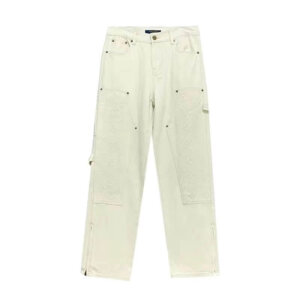
Baggy and wide-leg fits represent about 15% of the archive, reflecting current streetwear trends. These have a relaxed thigh and a wide leg opening, sometimes with additional volume through pleating at the waistband. The quality concern here is fabric drape — lightweight denim in a baggy fit can look slouchy and unstructured, while heavier denim (13oz+) creates the structured, architectural drape that makes wide-leg jeans look intentional rather than sloppy. Pricing: $14-$25.
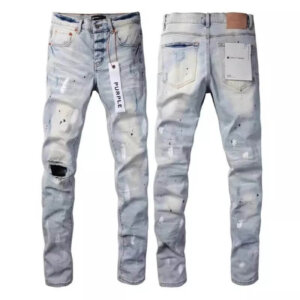
Distressed and treated denim rounds out the collection with about 10% of products. These feature factory-applied distressing: rips, abrasions, whiskering, and fade patterns. We evaluate distressing quality by checking whether abrasions look natural (random, varied) or mechanical (uniform, repetitive). Cheap distressing uses sandblasting that creates identical patches on every pair; quality distressing uses hand-applied techniques that create unique patterns. The risk with distressed denim is that factory rips can expand during washing — check that raw edges are reinforced with stitching behind the distress point.
Understanding Denim Weight for Your Needs
Choosing the right denim weight is the difference between jeans you wear constantly and jeans that sit in your closet. Here is a practical breakdown:
8-10oz (lightweight). These feel almost like chambray — soft, breathable, and ideal for summer wear. They drape rather than hold structure, which means they work best in slim or straight fits where the lack of structure is less noticeable. Lightweight denim fades faster and wears through sooner at stress points.
11-13oz (midweight). The sweet spot for most people. These jeans have enough body to hold their shape and resist bagging at the knees, while remaining comfortable in temperatures from 10°C to 30°C. Most jeans in our archive fall in this range. If you are unsure what weight to choose, 12oz is the safest default.
14oz+ (heavyweight). Stiff and substantial when new, breaking in over weeks of wear to develop personalized fade patterns. These are for denim enthusiasts who want raw denim that ages beautifully. Heavyweight denim is hot in summer and takes significant break-in time before it becomes comfortable. Not recommended for first-time buyers.
Stretch vs Rigid: Making the Right Choice
The stretch percentage fundamentally changes how jeans fit and behave:
0% stretch (rigid denim) holds its shape perfectly but does not accommodate body movement well in slim cuts. Best for straight and wide fits where the cut itself provides room. Rigid denim in a slim fit will feel restrictive when sitting, squatting, or climbing stairs. However, rigid denim produces the sharpest, most defined fade lines because the fabric does not move with your body.
1-2% stretch is the most versatile option. It provides enough give for comfort in slim fits while maintaining structure. The stretch is not visible — the jeans look like rigid denim but move better. This is what we recommend for most buyers, especially for daily-wear jeans.
3-4% stretch feels almost like sweatpants in terms of comfort but loses some of denim’s characteristic texture and structure. Jeans with this much stretch tend to bag out at the knees and seat by the end of the day, then recover in the wash. They are popular in skinny fits but less suitable for straight or wide fits where the extra stretch makes the fabric feel flimsy.
FAQ
Q: How much do jeans shrink after washing?
A: Rigid (non-stretch) denim shrinks 3-5% in the first hot wash, which is roughly one inch in the inseam and half an inch in the waist. Pre-washed (sanforized) denim shrinks 1-2%. Stretch denim shrinks minimally but may lose some elasticity over time. If you are buying raw denim, account for shrinkage by sizing up one inch in the waist.
Q: Should I size up or down for stretch denim?
A: For 1-2% stretch, buy your normal size — the stretch accommodates your body without the jeans looking loose. For 3-4% stretch, consider sizing down one size, as the fabric will relax and mold to your body shape with wear. Never size down for rigid denim.
Q: How do I prevent knee bagging on slim jeans?
A: Knee bagging occurs when the fabric stretches at the knee during sitting and does not fully recover. To minimize it, choose denim with 1-2% stretch (not more), avoid pulling jeans up by the waistband (which stresses the knee area), and wash jeans inside-out in cold water to help the fabric recover its original shape.
Q: What is selvedge denim and does the archive include it?
A: Selvedge denim is woven on traditional shuttle looms, producing a self-finished edge (the “selvedge”) that prevents unraveling. It is visible when the jeans are cuffed at the hem. Some entries in the archive are selvedge denim — this is noted on the product page. Selvedge construction generally indicates higher-quality denim but comes at a premium price.
For non-denim bottom options, check out our Joyagoo spreadsheet Pants & Shorts collection — 84 products covering cargo pants, joggers, shorts, and more.