Showing all 12 results


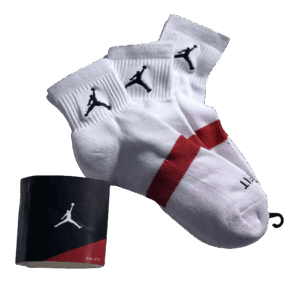
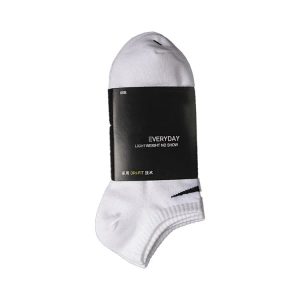
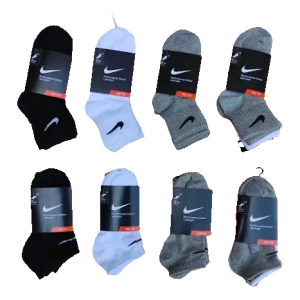
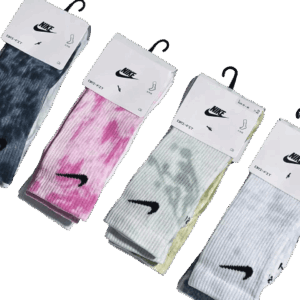
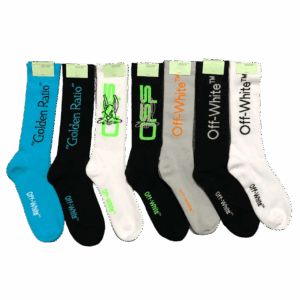
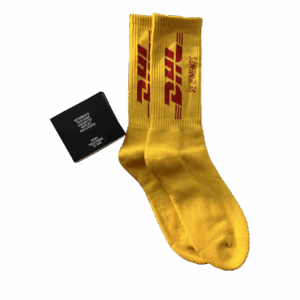

Joyagoo Spreadsheet Socks — 12 Pairs with Yarn Density, Elastic & Seam QC
Socks are the most overlooked item in a wardrobe and the most disappointing when they fail. A pair that slides down into your shoe by noon, a toe seam that digs into your pinky toe with every step, an elastic cuff that leaves red marks on your calf — these are the small miseries that ruin an otherwise good outfit. The Joyagoo spreadsheet Socks section catalogs 12 products that have been assessed for the specific construction details that determine whether socks stay up, stay comfortable, and stay intact through repeated washing.
This archive turns the socks section of a 2,000-row Google Sheet into a fast-loading, filterable web catalog. Instead of scrolling endlessly through spreadsheet rows trying to compare yarn composition and cuff elastic quality, you can evaluate all 12 options in under a minute. Purchasing happens on the agent platform — we assess and organize, you browse and buy.
For the complete product range, visit the Best Joyagoo spreadsheet homepage.
Sock Construction: What Separates Good from Bad
Socks appear simple, but their construction involves several technical elements that directly affect comfort and durability. Our assessment covers each one:
Toe seam construction. The toe seam is the single most important comfort factor in any sock. A poorly constructed seam creates a raised ridge that presses against your toes with every step, causing irritation and eventually blisters. We examine toe seams in QC photos for three types: linked toe (the gold standard, where loops are hand-linked to create a completely flat seam), seamless (machine-knitted to eliminate the seam entirely), and overlock (the budget method, which creates a visible raised ridge). Linked toe and seamless constructions are comfortable against the skin; overlock seams are tolerable in casual socks but unacceptable in athletic or dress socks.
Cuff elastic quality and recovery. The cuff is what keeps a sock from sliding down. We test elastic recovery by examining the cuff’s ability to return to its resting diameter after being stretched. Quality elastic maintains consistent grip through 30+ wash cycles; cheap elastic loses tension after 5-10 washes, causing the sock to sag. The cuff should be tight enough to stay up without restricting circulation — if it leaves a deep red mark on your skin after an hour, the elastic is too aggressive. We also check for non-slip silicone grippers on the inside of the cuff, which help prevent slippage without increasing compression.
Yarn density and knit tightness. Sock density determines durability and cushioning. We assess knit tightness by examining the fabric’s opacity — a dense sock blocks light transmission and provides better cushioning and durability, while a loose-knit sock is sheerer, less durable, and provides minimal cushioning. Athletic socks should be dense enough to provide impact absorption at the heel and ball of the foot. Dress socks can be lighter, but should still have enough density to prevent premature wear at friction points.
Heel and toe reinforcement. The heel and toe are the two highest-wear areas on any sock. Quality socks reinforce these zones with additional yarn or a double-layer knit. We examine the heel pocket for proper shaping — it should follow the natural curve of the heel, not be a simple tube. Reinforced toes should have visible additional density without creating bulk that affects shoe fit. Socks without reinforcement at these points will develop holes within weeks of regular wear.
Arch support and anatomical shaping. Premium socks include arch compression — a band of tighter elastic across the midfoot that provides support and prevents the sock from sliding forward. We check for arch support bands in athletic and mid-range casual socks. Anatomical left/right shaping (where each sock is knitted specifically for the left or right foot) is a premium feature that improves fit but is not essential for everyday wear.
Yarn composition analysis. Sock material directly determines performance. We verify yarn composition claims by examining fabric texture and behavior: cotton-blend socks (60-80% cotton, 15-30% polyester or nylon, 2-5% spandex) are the standard for everyday wear; merino wool blends offer temperature regulation and odor resistance; synthetic performance blends (primarily polyester with spandex) wick moisture for athletic use. We flag socks claiming high cotton content that exhibit synthetic shine or slippery texture, which indicates the actual cotton percentage is lower than claimed.
The 12 Products: Types and Styles
The Socks archive is small but covers the essential styles:
Crew socks are the most versatile type, sitting mid-calf and working with everything from sneakers to boots. The archive includes both plain crew socks (solid colors, minimal branding) and patterned options (stripes, color-blocked, logo-inspired designs). Crew socks typically cost $3-$7 per pair and are the best value for daily rotation. The quality differentiator is cuff elasticity — cheap crew socks lose their grip after a few washes, while quality ones maintain hold for months.
Ankle and no-show socks are designed for wear with low-cut shoes. Ankle socks sit just above the ankle bone; no-show socks sit below it and are hidden inside the shoe. The critical quality factor for low-cut socks is the heel grip — without a silicone heel gripper, no-show socks will slide off the heel and bunch under the arch of the foot. We specifically check for heel grippers on all no-show socks in the archive. Pricing: $3-$6 per pair.
Athletic and performance socks feature targeted cushioning at the heel and forefoot, arch compression, and moisture-wicking yarn blends. These are the most technically constructed socks in the archive. We assess cushioning density (should be noticeably thicker at impact zones without being bulky), arch band tension (firm but not restrictive), and ventilation mesh placement (should align with the foot’s natural sweat zones). Athletic socks run $5-$10 per pair.
Novelty and graphic socks round out the collection with bold patterns, embroidered designs, and statement colorways. The quality assessment for novelty socks focuses on embroidery or print durability — graphics should be securely attached and not peel or unravel after washing. Novelty socks are typically $4-$8 and serve as personality pieces rather than performance garments.
Why Socks Are the Ultimate Filler Item
Of all the categories on the platform, socks are the most shipping-efficient product. A pair of socks weighs 40-80 grams and can be compressed to the size of a deck of cards. This makes them the ideal filler item for consolidated orders:
If you are ordering a jacket and the shipping cost feels high, adding 3-5 pairs of socks to the same package increases the total weight by 200-400 grams — barely enough to affect the shipping tier, but enough to significantly increase the value of the order. Experienced buyers always keep a list of socks they want and add them to every order as low-cost, low-weight fillers.
Socks also make excellent test purchases for the platform. A $4 pair of crew socks lets you experience the full ordering cycle — browsing, purchasing, QC review, shipping — with minimal financial risk. If the socks arrive in good condition and the process was smooth, you can confidently place a larger order. If something goes wrong, you are only out $4 plus shipping.
For bulk buyers, socks are one of the few categories where ordering 10+ pairs at once makes practical sense. The per-pair shipping cost drops to under $1 when you order 10+ pairs in a single shipment, making bulk sock purchases one of the best value propositions on the platform.
Care and Longevity
Sock lifespan depends heavily on care practices. Here is how to maximize the life of every pair:
Wash socks inside-out in cold water. This protects the outer surface from pilling and preserves color vibrancy. The inside-out position also means that any pilling that does occur happens on the inside, where it does not affect appearance. Cold water preserves elastic integrity — hot water accelerates elastic breakdown and causes shrinkage in cotton-blend socks.
Never use chlorine bleach on socks. Bleach weakens elastic fibers and causes yellowing in white cotton over time. For whitening, use oxygen-based bleach (sodium percarbonate) which is gentler on fibers and does not degrade elastic.
Air drying extends sock life dramatically. Machine drying at high heat is the number one cause of elastic failure and fabric shrinkage in socks. If air drying is not practical, use the lowest heat setting on your dryer and remove socks while they are still slightly damp. Never dry socks on high heat — it will cut their lifespan in half.
Rotate your socks. Wearing the same pair two days in a row (even after airing out) compresses the cushioning and stresses the elastic in the same pattern. Rotating between 5-7 pairs gives each pair time to fully recover its shape between wears, extending the total lifespan of the collection.
FAQ
Q: How do I know what sock size to order?
A: Sock sizing is typically based on shoe size. Check the size chart on each product page for the shoe size range that corresponds to each sock size. If you are between sizes, size up — a slightly large sock can be adjusted at the toe, while a too-small sock will restrict circulation and wear through faster at the heel and toe.
Q: Will the socks shrink after washing?
A: Cotton-blend socks typically shrink 3-5% in hot water, which is roughly half a shoe size. Washing in cold water and air drying reduces shrinkage to 1-2%. Synthetic-blend socks (polyester-dominant) shrink minimally under any washing conditions. If shrinkage is a concern, choose socks with higher synthetic content.
Q: Are the no-show socks actually no-show?
A: It depends on your shoe type. No-show socks in the archive are designed to be hidden in low-cut shoes like boat shoes, canvas sneakers, and loafers. They may be visible in shoes with higher collar lines like running shoes or high-tops. We note the cut depth on each product page so you can match it to your footwear.
Q: How long do the socks typically last?
A: With proper care (cold wash, air dry, rotation between 5+ pairs), quality socks in the archive should last 3-6 months of regular wear before showing significant thinning at the heel or toe. Athletic socks with reinforced zones may last longer. Without proper care, any sock will degrade within 1-2 months.
For the perfect footwear pairing, browse our Joyagoo spreadsheet Shoes collection — because the right socks are only half the equation.