Joyagoo Spreadsheet Glasses: My 2026 Approach to Sourcing Eyewear
I’ll be honest — sourcing eyewear used to stress me out. Frames that looked great in photos arrived bent, lenses with visible distortion, and don’t get me started on the time I waited 45 seconds for a Google Sheet to load only to find the sunglasses I wanted had already sold out. When I discovered the Best Joyagoo spreadsheet platform, the loading problem disappeared overnight. Everything that was trapped in slow-loading Google Sheets became instantly browsable web pages.
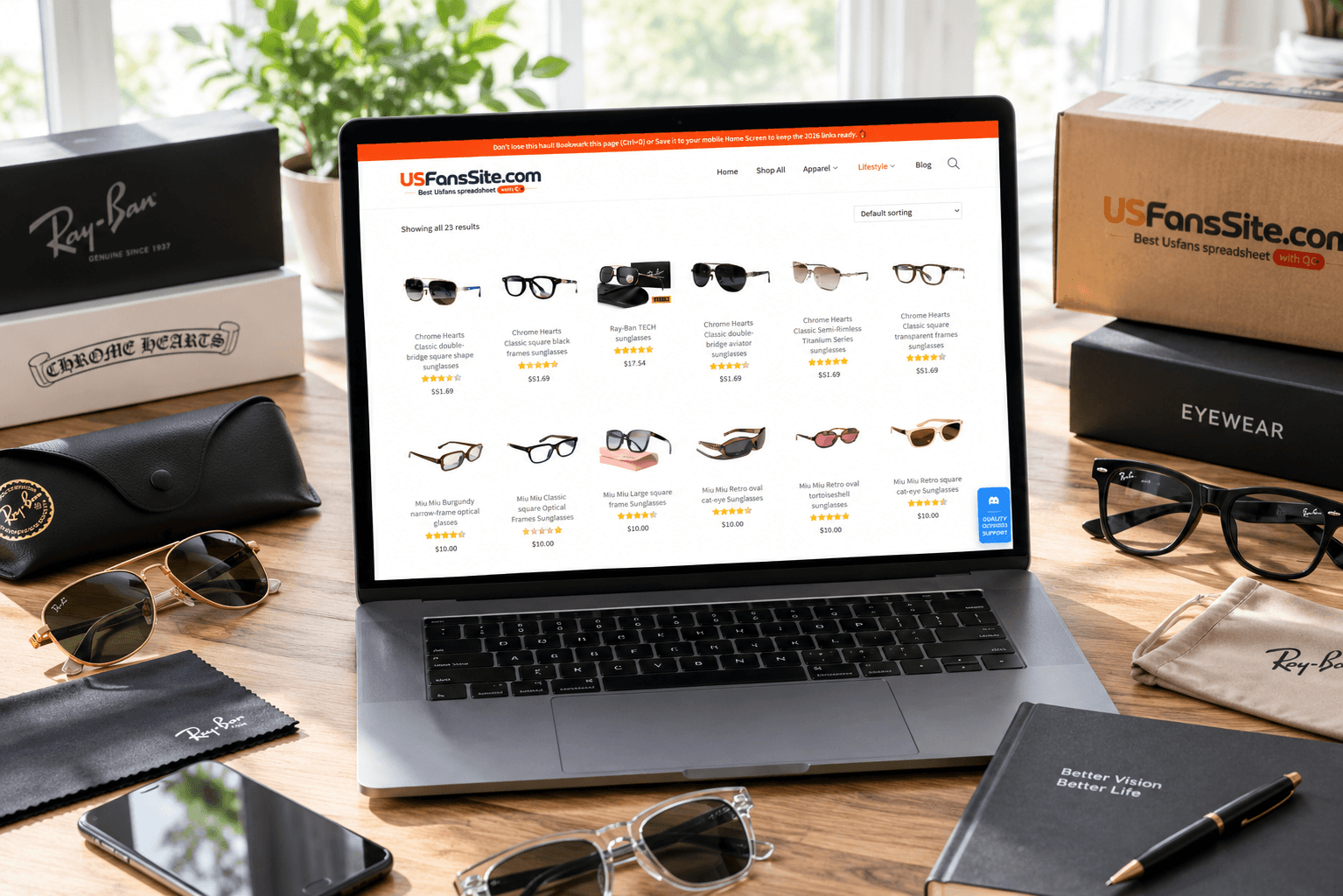
For eyewear specifically, the Joyagoo spreadsheet Glasses category is where I spend most of my browsing time. The web interface lets me see frame shapes, lens colors, and seller ratings without waiting for a single cell to render. Click a listing, check the product images, and if it looks right, the purchase link takes me straight to the agent platform.
The Eyewear QC Protocol I Never Skip
Glasses are arguably the category where QC photos matter most. A slight asymmetry in the frame or a hairline scratch on the lens is invisible in a product photo but immediately obvious the moment you put them on. After three disappointing orders, I built a QC checklist that I now follow religiously:
Lens clarity and surface defects. I ask the seller to hold the lens at an angle under bright light in the QC photo. This reveals scratches, swirl marks from polishing, and bubbles trapped in the material. If the QC photo only shows the lens face-on, request an angled shot — any seller who refuses is a red flag.
Frame symmetry. I compare the left and right temples (arms) in the QC photo. They should be mirror images. If one temple sits higher or extends further, the frame is warped and will sit crooked on your face. This defect is almost impossible to fix at home.
Hinge tension and alignment. The hinges should open smoothly with slight resistance and click into the fully open position. Loose hinges mean the glasses will slide down your nose constantly. The hinge screws should be flush, not protruding.
Nose pad position. For frames with nose pads, I check that both pads are at the same height and angle. Uneven nose pads create pressure points that become painful after an hour of wear.
Lens tint uniformity. For sunglasses, I hold the QC photo up to a consistent light source. The tint should be even across the entire lens. Gradient lenses should transition smoothly without banding. Uneven tint indicates poor lens manufacturing.
What the Product Descriptions Often Miss
One thing I’ve noticed across the eyewear listings: the descriptions rarely mention lens width, bridge width, and temple length — the three numbers that actually determine whether a frame fits your face. I’ve started keeping a note on my phone with my ideal measurements from frames I already own, and I message the seller directly to confirm dimensions before placing an order.
Most sellers respond within a few hours with the exact measurements. If a seller can’t provide basic frame dimensions, that tells you something about their attention to detail — and by extension, their product quality.
Shipping Eyewear Without Breaking Them
Glasses are fragile, and international shipping is not gentle. Here’s how I minimize breakage risk:
I always request that the seller include the original hard case. Yes, it adds a small amount to volumetric weight, but a hard case is the difference between glasses arriving intact and arriving in pieces. I’ve had two pairs arrive shattered because I opted out of the case to save $2 on shipping — that’s a lesson I won’t repeat.
For multiple pairs, I ask the warehouse to wrap each case individually in bubble wrap before consolidating. The platform’s repackaging service handles this well, and the extra padding costs almost nothing.
One shipping note specific to eyewear: some countries classify sunglasses differently from optical frames for customs purposes. Sunglasses with UV protection claims may require additional documentation. If you’re shipping to the EU, DDP shipping handles this automatically — the agent calculates any applicable duties upfront.
FAQ
Q: Can I do QC review on a phone screen?
A: For eyewear, I’d actually say a phone is workable — but with conditions. Frame symmetry and lens tint are visible on a phone. What you’ll miss is fine surface detail: micro-scratches, polish swirl marks, and tiny bubbles. If your phone has a high-resolution display, pinch-zoom to maximum on every QC photo. Still, when possible, I prefer reviewing glasses QC on a desktop monitor.
Q: Does the Joyagoo Spreadsheet work in Poland?
A: Yes. I’ve shipped eyewear to Poland without issues using DDP shipping. Customs clearance was smooth and took about two days. Polish customs does assess VAT on imported goods, so DDP is the better choice to avoid delays.
Q: Where can I open the full spreadsheet?
A: The full spreadsheet is accessible directly through the category pages on the website. Each category — Glasses included — shows all available listings in a web format. There’s no need to open Google Sheets at all; the platform has already converted everything into fast-loading pages.
Q: What should I do if I receive an unsatisfactory product?
A: For glasses specifically, check the lenses and frame alignment immediately upon arrival. If there’s damage from shipping, photograph everything within 48 hours and contact customer service. If the issue is a manufacturing defect that wasn’t visible in the QC photos (like internal lens stress marks), document it and file a dispute — most agents will offer partial compensation if you can show the defect wasn’t present at QC stage.