Joyagoo Spreadsheet Watches: Sourcing Timepieces in 2026
Watches are the most technically complex item I source through the platform. Unlike clothing, where fit and fabric are the primary concerns, watches have movements, crystal types, water resistance ratings, and dozens of mechanical details that determine whether you’re getting value or junk. My old Google Sheets workflow was painful — loading times of 30+ seconds while trying to compare spec columns across sellers. The Best Joyagoo spreadsheet platform fixed the loading problem and standardized the listing format, making spec comparison instant.
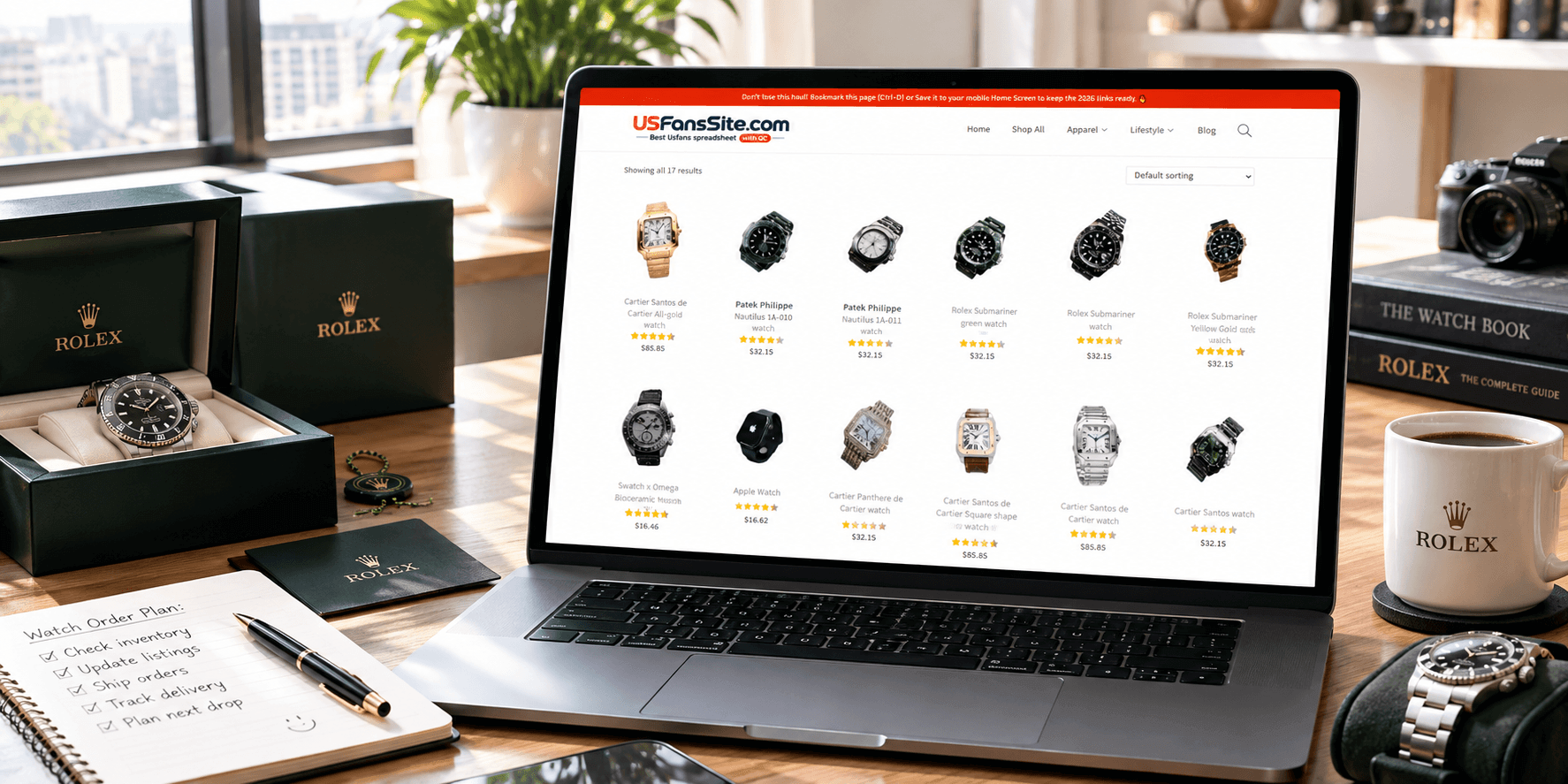
The Joyagoo spreadsheet Watches category covers automatic, mechanical, and quartz timepieces. Each listing shows the dial design, case dimensions, movement type when specified, and a direct purchase link to the agent platform.
Movement Types: What You’re Actually Buying
The movement is the heart of the watch, and it’s the first thing I verify before placing an order. Here’s what each type means in practical terms:
Quartz movements are battery-powered, accurate to within 15 seconds per month, and require minimal maintenance. They’re the most reliable and affordable option. If a listing says “quartz” and the price is under $20, you’re getting a basic but functional timekeeper. The battery typically lasts 1–2 years.
Automatic movements are mechanical, self-winding through the motion of your wrist. They’re accurate to within 5–15 seconds per day — less precise than quartz but valued for their craftsmanship. A quality automatic movement has a smooth sweeping seconds hand (multiple beats per second), while budget automatics may have a noticeable tick. Automatics require regular wear to maintain power reserve — typically 38–40 hours off-wrist.
Manual mechanical movements require daily hand-winding. They’re less common in the listings but offer the purest mechanical watch experience. Accuracy is similar to automatic.
I always confirm the movement type with the seller. If a listing shows an automatic movement at a price point that seems too good, I ask for a movement photo — specifically, a photo showing the caseback or, for display caseback models, the movement itself.
Watch QC: The Most Detailed Checklist I Use
Watches have more QC points than any other product category. Here’s the comprehensive checklist I run through on every order:
Crystal clarity and defect check. The crystal (the transparent cover over the dial) should be clear and free of scratches, bubbles, or distortion. I ask for a QC photo with light reflecting off the crystal at an angle — this reveals scratches and coating defects that are invisible in a straight-on shot. Mineral crystal is standard; sapphire crystal is premium and significantly more scratch-resistant.
Dial alignment and printing. Every element on the dial — hour markers, logo, text, date window — should be precisely positioned. I compare the dial layout against reference photos of the watch design. Misaligned markers or crooked text indicate poor quality control. The date wheel, if present, should align perfectly with the date window cutout.
Hand alignment. The hour, minute, and seconds hands should align correctly at the 12 o’clock position. When the minute hand points exactly at 12, the hour hand should point exactly at an hour marker. Misalignment here is a movement quality issue that can’t be corrected without servicing.
Bezel rotation and alignment. For watches with rotating bezels (dive-style), the bezel should rotate with firm, even resistance and align precisely with the dial markers at the 12 o’clock position. A bezel that wobbles or has dead spots in its rotation is a construction defect. For fixed bezels, I check that the bezel sits flush with the case with no gaps.
Crown operation. The crown should pull out to its setting positions with a clear click. In the time-setting position, the hands should advance smoothly when the crown is turned. The crown should screw back in (for screw-down crowns) with smooth resistance and seat flush with the case.
Case finishing consistency. Brushed and polished surfaces should be consistent and cleanly delineated. I look for over-brushing (where brushed finish crosses into a polished area) and inconsistent polish. The case edges should be crisp, not rounded or chamfered where they shouldn’t be.
Strap or bracelet quality. For metal bracelets, I check link alignment, end-link fit (the end links should sit flush against the case with no gap), and clasp functionality. For leather straps, I check stitching consistency, edge finishing, and buckle quality. For rubber/silicone straps, I check for flash (excess material) at the mold lines and firmness consistency.
Lume brightness and uniformity. If the watch has luminous markers, I ask whether the QC photos can show the lume in low light. Quality lume should glow brightly and uniformly across all markers and hands. Dim or patchy lume indicates low-grade luminous material.
Water Resistance Claims: What I Trust and What I Don’t
Water resistance ratings on budget watches should be approached with realistic expectations:
- “3 ATM” or “30m”: Splash resistant only. Do not submerge. Hand-washing is the limit.
- “5 ATM” or “50m”: Light water exposure. Shower or rain, but not swimming.
- “10 ATM” or “100m”: Suitable for swimming and snorkeling. Not for diving.
- “20 ATM” or “200m+”: Dive-rated. Full submersion at depth.
I treat these ratings conservatively. A “30m” rated budget watch is not waterproof — it’s splash-resistant. I don’t shower or swim with any watch rated below 50m, regardless of the claim. For watches I plan to wear in water, I look for screw-down crowns and screw-down casebacks, which provide genuine water resistance.
Shipping Watches: Small, Valuable, and Fragile
Watches are small and light — a typical watch weighs 100–200 grams with packaging. But they’re also valuable and mechanically sensitive, which means shipping requires more care than the weight would suggest.
Always use a hard watch case. I never ship a watch without a rigid case. The original watch box is ideal, but even an aftermarket hard case is better than a padded envelope. The crown and crystal are the most vulnerable points — a hard case distributes impact force away from these components.
Secure the crown and bracelet. Before shipping, I ask the warehouse to ensure the crown is screwed in (for screw-down models) and the bracelet is secured so it can’t swing freely and scratch the case during transit.
Declared value and insurance. For higher-value watches, I declare the full value for insurance purposes. Under-declaring to save on customs duties means you can’t claim full compensation if the package is lost or damaged. The trade-off is between customs cost and insurance coverage — I always choose insurance coverage for watches.
DDP for international shipments. Watches are a category where customs offices pay close attention. A package labeled as “watch” will almost certainly be opened and inspected. DDP shipping handles all customs declarations and duties upfront, preventing the delays that come with DDU shipments of valuables.
FAQ
Q: Is the Joyagoo Spreadsheet website safe?
A: Yes. The platform is a product discovery interface — you browse listings and click through to the agent platform to place orders. No payment information is entered on the Joyagoo site. The agent platform handles all transactions through its own secure payment system.
Q: What is its relationship with Joyagoo?
A: The spreadsheet platform is a web-based interface that converts product data — originally maintained in Google Sheets — into fast-loading, browsable web pages. It’s connected to the Joyagoo agent platform for order fulfillment. The relationship is straightforward: the platform helps you find products, and the agent platform handles purchasing, QC, warehousing, and shipping.
Q: What about Joyagoo shipping?
A: For watches specifically, I recommend express shipping lines. The shipping cost difference between economy and express is small for lightweight items like watches — often just $3–5 — and express shipping reduces transit time, which reduces the risk of damage from extended handling. Express to most destinations takes 7–12 days.
Q: What should I do if I receive an unsatisfactory product?
A: For watches, the most common issue is a defect that wasn’t visible in QC photos — a movement that stops intermittently, a bezel that won’t rotate, or condensation under the crystal. Document the issue with clear video evidence (especially for movement issues) and contact the agent immediately. Movement defects are often fixable through the agent’s repair service, and reputable agents will coordinate repairs or replacements for manufacturing defects identified within the first week of receipt.
Q: Which one gives free QC photos?
A: Most sellers on the platform provide QC photos free of charge for watches, as long as you request them before approving the order. Some sellers even include QC photos in the listing itself. For watches, I consider free QC photos a baseline requirement — a seller who charges for QC photos on a watch is a seller I won’t use, because QC transparency is essential for this category.