Showing all 4 results
Joyagoo Spreadsheet Lacoste — The Crocodile, Pique Cotton, and Polo Perfection
Lacoste is proof that simple doesn’t mean easy. A cotton pique polo shirt with a crocodile logo sounds straightforward — until you try to source one on the Joyagoo spreadsheet and realize that the pique weave, the collar roll, the placket spacing, and the crocodile embroidery all have to be exactly right or the whole thing falls apart. This is a brand where “close enough” is immediately visible to anyone who’s worn the real thing.
The crocodile is the first brand logo ever stitched onto a garment — René Lacoste put it there in 1933. That heritage means the croc has been studied, replicated, and counterfeited for 90 years. The good news: the spreadsheet community has had decades to figure out which factories get it right. The bad news: there are a LOT of factories getting it wrong.
Pique Cotton: The Fabric That Defines Lacoste
Lacoste’s signature fabric is cotton pique — a waffle-weave construction that’s breathable, structured, and has a distinct texture. The waffle pattern creates small honeycomb cells that you can see and feel. This is what gives the polo its crispness and ability to hold shape after washing.
- Waffle depth: Premium pique has deep, visible honeycomb cells. Budget pique is flat and smooth — it looks like jersey, not pique.
- Stretch: Pique has natural mechanical stretch from the weave — no elastane needed. If the fabric stretches and doesn’t recover, it’s a loose-knit jersey, not pique.
- Surface texture: Run your finger across — you should feel the waffle texture clearly. Smooth fabric means wrong weave.
Fabric weight: Target 220-240gsm. Under 200gsm is too thin and translucent. Over 260gsm is too heavy and loses the breathable quality.
The Crocodile: Small Detail, Big Tell
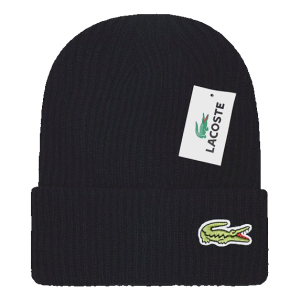
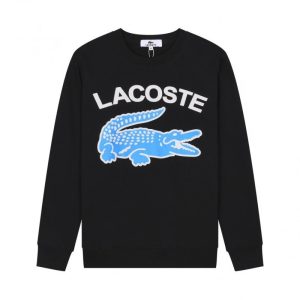
The Lacoste crocodile is embroidered on the left chest. It’s small — about 3cm wide — and dense. On good batches, the embroidery is crisp with visible scales and a red mouth detail. On budget batches, the croc looks like a blurry green blob. Ask the agent for a macro photo of just the crocodile.
The Joyagoo spreadsheet Lacoste listings we curate check three croc details: scale definition (individual scales visible), mouth color (red/maroon, not pink), and thread density (no gaps between stitches). If all three check out, you’re looking at a premium batch.
The Collar Roll Test
A real Lacoste polo collar rolls — it doesn’t lie flat. The collar is constructed with interfacing that creates a natural curve, so when unbuttoned, the collar stands slightly away from the neck. Budget batches use soft, unstructured collars that collapse flat against the chest. In QC photos, ask the agent to unbutton the polo and photograph the collar from the side — it should show a visible curve.
| Lacoste Item | QC Priority | Price (¥) | Best For |
|---|---|---|---|
| Pique polo | Pique weave + collar roll + croc | 50-90 | Daily wear |
| V-neck sweater | Wool blend + ribbing quality | 80-130 | Smart casual |
| Track jacket | Cotton twill + ribbed cuffs | 100-160 | Sport aesthetic |
Lacoste Q&A
How do I verify the pique weave from QC photos?
Ask for a close-up photo of the fabric at an angle. Real pique shows a clear honeycomb/waffle pattern with visible depth. If the fabric looks smooth and flat like a t-shirt, it’s jersey, not pique. The texture difference is immediately obvious.
Do Lacoste polos on Joyagoo shrink after washing?
Good batches use pre-shrunk cotton pique, so shrinkage is minimal (2-3%). Budget batches may shrink 5-8% because the fabric wasn’t pre-shrunk. Wash cold and hang dry to minimize any shrinkage.
What’s the difference between Lacoste and other polo brands on Joyagoo?
The pique weave quality and collar construction. Other polo brands use simpler jersey or flat-knit fabrics. Lacoste’s pique has a specific honeycomb texture and structure that’s harder to replicate — which is why crocodile QC is about more than just the logo.
“The crocodile has teeth — and the pique has depth. Check both.”